
Church flowers: beauty with restraint and purpose
Anyone choosing flowers for a church service is working in a space with its own logic. A church is not a ballroom or a hotel foyer. Flowers work best when they serve the rite: framing the altar, marking the font for a baptism, accompanying a coffin, or quietly shaping the entrance for a bride and groom.
The right scale depends on the building and the service. A small baptism chapel may need only one arrangement, while a large nave can make a compact display look lost. Ask to see the space from the seats, not just beside the altar. That view helps you judge whether people will still see the ministers and the family clearly.
The liturgical colours are a useful introduction to the church calendar, but they concern worship and vestments rather than a universal bouquet colour chart. Roman Catholic, Protestant and Orthodox practice differs. Ask the parish what is appropriate for your date, and use the guide to the church year to understand the season before choosing a palette.
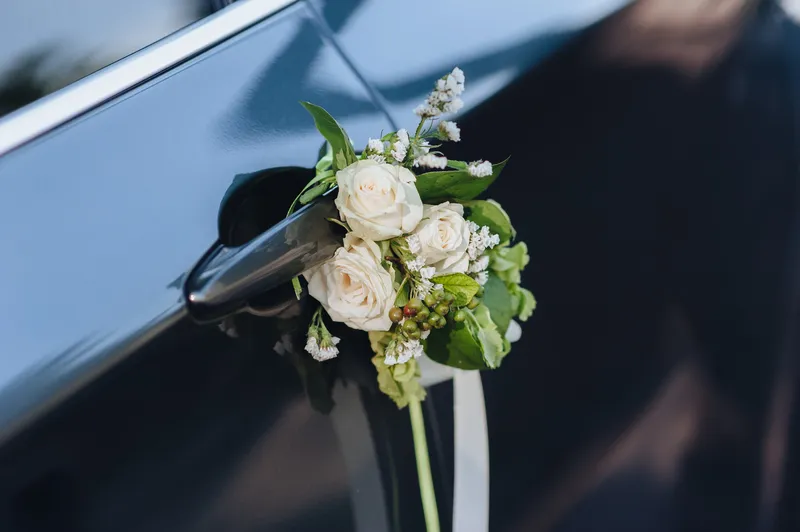
Church weddings: joyful, but still prayerful
For a church wedding, begin with two or three colours you enjoy and a photograph of the actual interior. Cream flowers may sit gently against dark wood; brighter colours may suit a family preference. There is no need to imitate a supposed national style. The couple’s taste, the light and the building are more useful design guides than broad labels such as “Southern European” or “Scandinavian”.
Before anything is ordered, the couple should ask the parish office or verger what is permitted. Many churches do not allow wire, nails or adhesive tape on pews or stonework. Some want altar arrangements to stay for Sunday worship after a Saturday wedding; others allow only a short setup window before the service. In older churches in cities such as Warsaw or Vienna, narrow aisles and historic flooring can also rule out large freestanding pieces. Candles, loose petals and big floral arches are not welcome everywhere, so checking early saves money and stress.
The bridal bouquet in a church setting
The bridal bouquet can be more personal than the church flowers. Roses, peonies, lily of the valley, freesias, stock and sweet peas are classic choices, but season usually gives the best answer. Spring suits tulips and ranunculus; summer, garden roses and sweet peas; autumn, dahlias and berried branches; winter, amaryllis, anemones and pine or eucalyptus foliage. If the service is long, ask for stems that hold up well out of water and a handle that feels comfortable in the hand.
The bouquet does not need to carry a complicated message. It can simply echo what the service celebrates: gratitude, trust, beauty and the start of a shared life before God. Many couples also include one flower with family meaning, such as a grandmother's favourite rose or myrtle from a parent's garden.
Funerals and memorial services: flowers between farewell and hope
At Christian funerals, church flowers speak in two directions at once. They acknowledge grief, and they point toward the hope that death does not have the last word. In many European countries, white remains a key mourning colour at church because it suggests resurrection, light and peace. Deep red, violet, blue and natural greens can also feel solemn and fitting. A related subject is covered in the article “Flowers at memorial services and funerals: symbolism and custom in a church context”.
The forms vary: coffin sprays, urn arrangements, wreaths, hand-tied bouquets, small bowls for the sanctuary, or single stems to lay at the grave. The wreath is especially rich in meaning because its circular form suggests continuity and eternity. Still, not every family wants one. In some urban parishes, simpler seasonal work without floral foam is preferred, and the church may ask for arrangements that can be removed quickly before the next service.
For a funeral away from home, let the family’s wishes guide the design and let the organiser confirm the venue. If you are arranging sympathy flowers in Warsaw from IFIORA, ask about availability for the named church or cemetery and the required handover time. A same-day option, if offered, still needs confirmation for that particular service; an ordinary order deadline is not a funeral delivery guarantee.
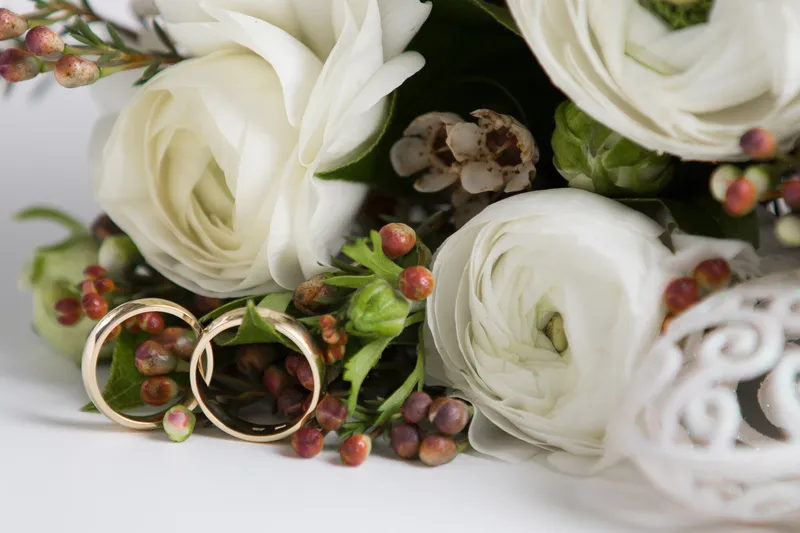
Which flowers are suitable for mourning?
Lilies are often read as signs of purity and resurrection, roses of love and lasting attachment, carnations of faithfulness, and chrysanthemums, in many countries, of remembrance. Still, meanings are not fixed across Europe. In some places chrysanthemums are seen almost only as cemetery flowers; elsewhere they are used much more widely. International families should check those associations carefully. If the service falls in December, “Advent in church: customs, services and ideas for families, clearly explained” helps with the season's church tone and symbolism.
A seasonal flower can hold a familiar memory: tulips on a kitchen table, garden roses in summer or an autumn branch from a favourite walk. Ask the florist which suitable stems are available and which can stay in water until setup. The Royal Horticultural Society is a useful starting point for plant identification and care, while the florist should advise on the cut stems actually being supplied.
Baptism flowers: leave space around the font
For a baptism, check where the family, godparents and minister will stand. Keep the font accessible and leave room for the child to be held safely. A low arrangement beside the space may work better than trailing flowers fixed to the font. Ask where candles will be carried or placed, and keep containers stable and clear of that movement.
If several children are being baptised in the same service, agree one shared arrangement rather than arriving with competing decorations. There is no requirement to match flowers to the baby’s clothing. A modest display the parish can reuse may be a kind, practical choice. The baptism preparation guide covers the family’s other arrangements.
Check seasonal limits before paying a deposit
For Roman Catholic Mass, paragraph 305 of the General Instruction of the Roman Missal calls for restrained floral decoration around the altar rather than on its table. Advent decoration should be moderate. In Lent, altar flowers are normally excluded, with exceptions including Laetare Sunday, solemnities and feasts. Ask the parish how this applies to your service; do not assume the same practice in every Christian tradition.
A five-point handover note
- The date, service start time and exact church entrance for deliveries.
- The number and dimensions of arrangements, including containers.
- Approved positions and any surfaces or fixings to avoid.
- The named person receiving the flowers and the agreed setup window.
- Who collects, reuses or removes the flowers and containers afterwards.
My practical tip: take one photograph from the back of the church and one beside the font or ceremony space, with permission. Mark the proposed positions on copies for the florist. A shared picture often resolves a misunderstanding faster than several messages about “the left side” of a room.
Questions and answers
Can you decorate any church freely with flowers?
No. Each parish may set its own rules, especially in historic churches and around the altar, floors and fixings. Before you book a florist, ask the parish office, sacristy or verger what is allowed. Delivery and collection times matter too, as does whether the arrangements may stay in place after the service.
Which colours suit a church wedding?
White, cream, soft pink and green tones are nearly always safe because they feel calm and celebratory. Depending on the season of the church year, the region and the couple's style, stronger accents can work too. What matters is that the flowers do not overpower the sanctuary and still sit well within the liturgy.
Are white flowers always right for funerals?
White flowers are very fitting in many Christian settings because they suggest peace, light and resurrection. Even so, red, violet, blue or natural tones can also be right, especially if they reflect the character of the deceased or a family custom. In international families, it is wise to check cultural meanings carefully.
How early should you order church flowers?
For weddings, plan several weeks or even months ahead, especially in busy months and for large installations. Baptisms often need less lead time if the request is simple. Funerals usually move faster; in that case, clear details about the church, cemetery, time, style and colour palette are especially helpful.